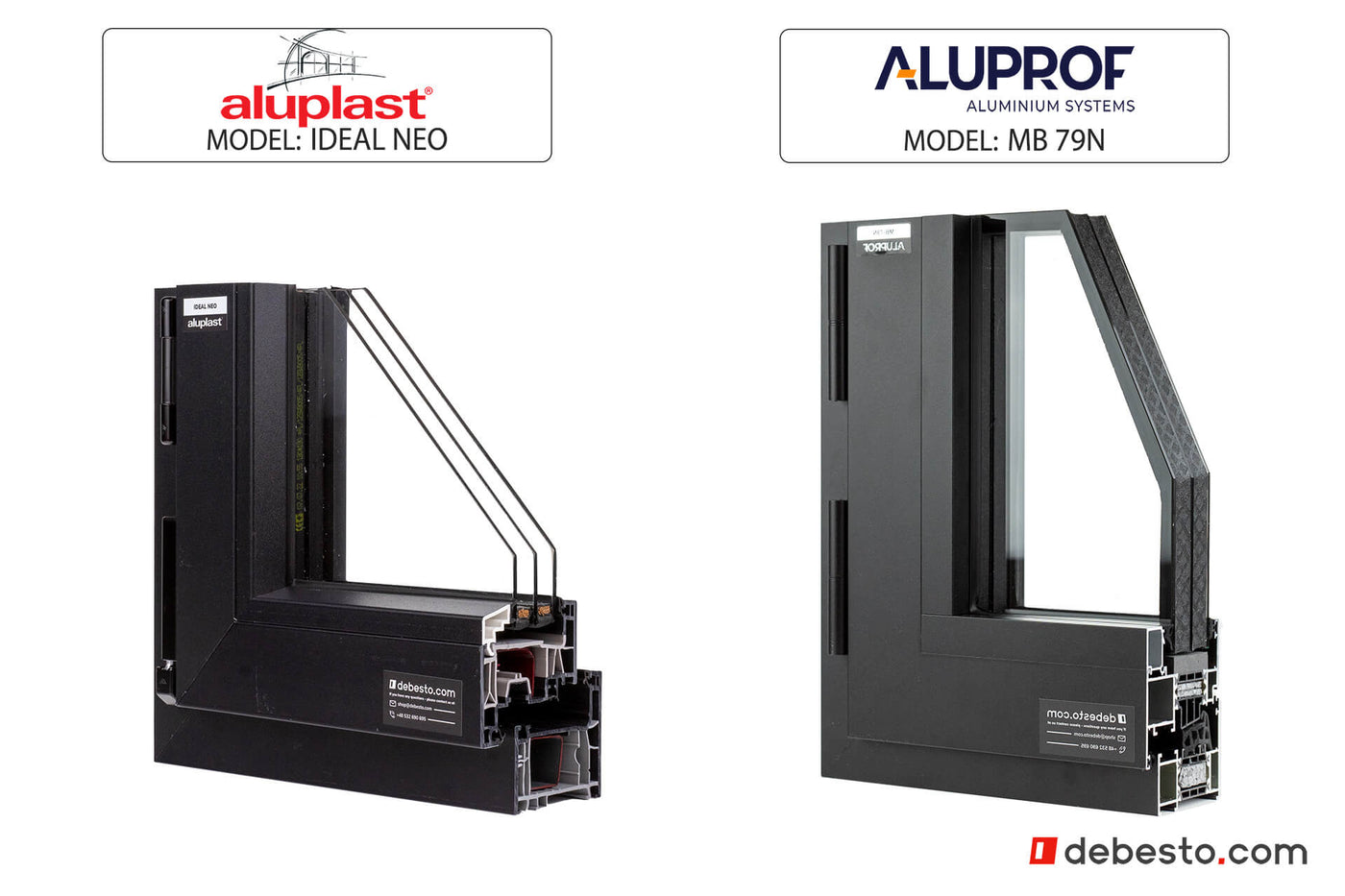
Most Spec Home Builders lose thousands of dollars per project making a binary decision: plastic or aluminum windows?
European uPVC windows changes that assumption and can even replace aluminum in some cases. However, choosing uPVC or aluminum blindly still has hidden traps that will instantly eat into your profit.
Below, we show where to use uPVC, where to pay extra for aluminum, and how to build a hybrid window set that protects your profit without limiting the premium look.
From this article, you’ll learn:
How U.S. duties on uPVC and aluminum windows affect your final profit?
How European uPVC differs from American vinyl and fiberglass?
Whether alu-look uPVC can truly replace aluminum?
When aluminum is worth the higher price?
How to combine uPVC and aluminum to cut window costs without hurting the design?
Can uPVC Windows Work in a Million-Dollar Spec Home?
In the U.S., “vinyl” usually means cheap windows. Builder-grade. Thin frames. Weak look. Not something you want in a premium spec home. That belief is fair only for standard American vinyl.
European uPVC is a different product. It is built for higher performance, tighter tolerances, and better long-term stability.
Is European uPVC Better Than Standard American Vinyl?
The short answer is yes. European uPVC profiles typically use thicker profile walls, steel reinforcement, and better sealing systems. That helps reduce the bending, warping, and soft-frame feel common with lower-grade vinyl windows. It’s more like fiberglass.
When I explain this to clients, I tell them not to compare vinyl with uPVC. It is a different class.
The easiest way to think about it: put vinyl, uPVC, and fiberglass on one table, and uPVC will feel much closer to fiberglass.
Patrick Łakucewicz, Business Consultant at debesto
Why Would a Spec Home Builder Use uPVC in Their Project?
Outside the true luxury segment, aluminum on every opening can kill the window budget.
European uPVC gives you a smarter option: strong performance, a clean modern look, and more profit than a full aluminum package. The cost gap is real.
A U.S. triple-pane window with around 0.20 U-factor often costs $766–$900 per unit. A high-spec European uPVC window can reach even around 0.14 U-factor for about $431–$651 per unit. So you can get close to Passive House-level performance without paying top-tier U.S. window prices.
And with alu-look profiles, uPVC can also imitate aluminum (more on that later in this article) . Use uPVC where performance and profit matter. Use aluminum where oversized glass, slim frames, or the main elevation help sell the house.
Where Does uPVC Make Sense and Where Does It Fail?
Use European uPVC when…
You need a low U-factor at affordable price
You want more profit on standard windows nu cutting duty cost
You want an alu-look finish without aluminum pricing
You do not need slim frames or large glasses
Do not use uPVC when…
You need frameless glasses
You need oversized sliding patio doors
The front door must be a premium selling feature
Dark frames will sit in heavy sun
The architect needs a perfect color match
Maximize your spec home profit with the optimal window set
Get help selecting the highest-value system to boost your markup
Total Cost: Why Are Aluminum Windows More Expensive Than uPVC
Most builders think the price gap comes down to the material. That is only part of the story.
In 2026, if you import windows from Europe, comparing product price alone does not work. As a spec home builder, you do not care only what the window costs to manufacture. You care about the full landed cost: product, shipping, delivery to the jobsite, and U.S. duties.
That is where the math changes. European aluminum windows face higher U.S. duty costs than uPVC windows. If you ignore that, a cheaper-looking decision can turn into thousands of dollars in lost profit.
That is why the real comparison is not uPVC vs aluminum at factory price. It is uPVC vs aluminum at final cost, delivered on your job site.
How Much More Do European Aluminum Windows Cost Than uPVC in 2026?
For standard windows, aluminum is often 1.5x to 2x more expensive than uPVC.
Estimated Full Landed Cost – uPVC vs Aluminum (Price for sq/feet)
Type
uPVC
Alu
Price gap
2-glazed
$35
$68
+95%
3-glazed
$43
$74
+70%
Note:These numbers show the estimated total cost per sq ft based on internal debesto quotes. They include duties and delivery. Final price depends on the project: window sizes, construction types, specifications, and delivery scope.
Sliding doors work differently. The price gap is often smaller – around 36%. For example: $78/sq ft for uPVC sliding doors vs $106/sq ft for aluminum sliding doors. That makes sliders a smart place to use aluminum when the design needs it.
The same logic often applies to front doors. The price gap between uPVC and aluminum is closer to the slider range, while aluminum gives you better long-term durability and more design options.
Why Is the Price Gap So Big in 2026?
Because duties hit aluminum much harder. Effective duties and import fees are about 16% for uPVC. For aluminum, they can reach about 56%. That difference shows up directly in your project cost. So the question is not whether aluminum is better. The question is where aluminum is worth the extra money and where it just cuts into your profit.
When Should a Spec Builder Pay More for Aluminum?
Pay for aluminum where it helps sell the house. It makes sense for large sliding doors, key elevations, oversized glass, and places where slim frames change how the property looks.
Use uPVC where the buyer still gets quality, performance, and a clean look, but will not pay extra for aluminum.
On a typical 3,000 sq ft spec home with a local window package around $60,000, this mix can keep thousands of dollars in the project.
Exception: Aluminum Windows for High-End Projects
High-end projects can work differently. The larger and more premium the home, the more likely a full European aluminum package can still be a game changer.
In one recent project, my client received a local U.S. quote above $500,000.
With direct import from Europe, our full landed cost (including delivery and duties) came in just over $300,000. That difference, around $200,000, is his potential profit.
Design: Which Gives You More Flexibility – uPVC or Aluminum?
European uPVC can often give you the same clean, dark, aluminum-style look on standard windows. In theory, aluminum gives you access to 200+ colors. uPVC gives you “only” several dozen.
But in real projects, most clients use just a dozen or so options. So the real limit is not the look. The real limit is size, especially large constructions and slim frames.
Can uPVC Windows Look as Slim and Modern as Aluminum?
Yes. Modern European uPVC profiles can successfully imitate aluminum. It’s not only about color. The key is the profile geometry: sharper lines, straighter shapes, and a more minimalist form.
When you combine that with the right foil – color and surface texture – you get the alu-look effect. After installation, even on the same elevation, many buyers will struggle to tell which windows are uPVC and which are aluminum. That is where your profit shows up.
Alu-look uPVC can deliver a similar visual effect on standard openings for a fraction of the aluminum cost. If the buyer cannot see the difference, paying aluminum pricing for every standard window may not make business sense.
Where Does uPVC Hit Its Design Limits?
uPVC is still not aluminum. Even high-quality European uPVC has technical limits. It usually cannot handle the same large sizes, ultra-slim frames, or frameless-style glass that aluminum can.
This matters most with large patio sliders, wide openings, and glass walls or front doors, where durability and design are important too.
We also recommend aluminum for front doors.
The savings from uPVC are usually small, because hardware drives much of the cost. Aluminum is stronger, more stable, and better for daily use.
It also gives you more design freedom: taller doors, premium overlay panels, and a front entry that becomes a selling feature of the home
Madeleine Stępień, Technology Consultant at debesto
When should you choose uPVC, and when should you choose aluminum?
Use European uPVC for…
Standard windows
Bedrooms and bathrooms
Side and rear elevations
Aluminum-look visual consistency
Use European aluminum for…
Large sliding doors and front doors
Oversized openings
Main elevations
Ultra-slim or frameless look
How Do You Mix uPVC and Aluminum Without Making the House Look Cheap?
Use a hybrid package. Put aluminum sliders where the buyer notices them first: living room, kitchen, backyard elevation, big glass openings.
Use aluminum-look uPVC windows everywhere else. That gives you the modern exterior, keeps the package visually consistent, and protects thousands of dollars in profit. This is smart saving, not cheaping out.
Which Lasts Longer on a Jobsite – uPVC or Aluminum?
Most builders assume aluminum is always the safer long-term choice. That is mostly true, but not always the full story. Aluminum has the edge in durability, especially in hot climates and exposed elevations. But high-quality European uPVC is still a serious option when the climate, color, and exposure make sense.
Will Dark uPVC Warp or Fade in the Sun?
In the North East, both European uPVC and thermally broken aluminum should work well. The climate is closer to Europe, so the risk is lower.
Still, be careful with dark uPVC on windows exposed to direct sun with no shade. Dark colors absorb more heat, expand more, and can increase the risk of service calls over time. uPVC can also fade under long-term sun exposure.
In those cases and in hotter states like Texas powder-coated aluminum is the safer choice. Powder coating helps protect the color from fading. Aluminum can still react to long sun exposure, but the risk of warping is about 3x lower, making it the better option. Regardless of material, we recommend using overhangs or shading where possible.
Climate / condition
Safer choice
North East, moderate exposure
uPVC or aluminum
Direct sun + black frames
Aluminum
Texas / Florida heat
Aluminum
Cold northern states
uPVC or aluminum with thermal break
Which Material Is More Likely to Get Damaged in Shipping or on Site?
Major structural damage is rare with both. Aluminum is naturally rigid. European uPVC is reinforced with steel. In real transport claims, the glass is more likely to break than the frame. The bigger difference is surface damage.
Risk
uPVC
Aluminum
Frame bending
Low
Low
Glass damage
Possible
Possible
Surface scratches
Higher risk
Lower risk
Repair after scratching
Harder
Easier to polish/touch up
uPVC is usually foil-wrapped. Once that foil is scratched, repair is harder. Powder-coated aluminum is tougher, scratches are often less visible, and small surface marks are usually easier to handle.
Every debesto shipment is insured and checked before dispatch, but the material choice still matters if your site is rough.
Are Replacement Parts Faster for uPVC or Aluminum?
The material does not decide that. Hardware, handles, hinges, gaskets, and other service parts usually have similar replacement timing for both systems. The key is not uPVC vs aluminum. The key is using a supplier who can identify the part fast and ship the correct replacement.
Can uPVC or Aluminum Windows Delay Your Schedule?
A window can look great on paper and still hurt the job. If it arrives late, fails documentation review, or slows down your install crew, it becomes a schedule risk. Material matters, but not in the way most builders think.
Does Aluminum Take Longer to Produce Than uPVC?
Usually, yes. European aluminum windows often need about 1–2 weeks more production time than uPVC. That does not mean aluminum is a bad choice. It means you need to plan earlier, especially if the windows must land around the framing stage.
Material
Typical production tine
uPVC
from 2 weeks
Aluminum
Usually +1–2 weeks
Hybryid
Plan around the slower aluminum items
For a mixed package, do not plan around the easiest windows. Plan around the slowest items: large aluminum sliders, custom colors, and special configurations.
Can European uPVC and Aluminum Pass NFRC Requirements?
Yes, if you choose the right system. If you need it, both materials can come with full NFRC certification.
Examples include Aluplast Ideal 4000, Salamander bluEvo 82 in uPVC and Reynaers MasterLine 8, Reynaers MasterPatio (sliding door) in aluminum.
The risk is not “uPVC vs aluminum.” The risk is buying a system without the paperwork your inspector, architect, or permit reviewer needs.
Are uPVC and Aluminum Windows Different to Install?
Not really. The material itself does not decide install difficulty. The main factors are window size, glass weight, construction type, and jobsite access.
European uPVC is heavier than standard American vinyl because it uses thicker profiles, steel reinforcement, and usually heavier glass packages. But in the same size, European uPVC often weighs close to aluminum.
Plan the crew around the weight. For larger units, use glass suction cups, more installers, or a window manipulator. For big windows, it may also make sense to remove the sash or deglaze the unit before installation.
Can European uPVC or Aluminum Come With a Nailing Flange?
Yes.Both European uPVC and aluminum can be ordered with a nailing flange option for U.S. wood-frame construction.
Expect around 13% extra cost. That can be worth it if it reduces install confusion, keeps the crew closer to familiar U.S. practice, and lowers the risk of flashing mistakes.
Main Differences for Spec Home Builders: uPVC vs. Aluminum (Table)
Aspect
Aluminum
uPVC
Upfront Cost
Higher
Lower
ROI Potential
Can enhance perceived home value
Lower cost can protect margins
Design Options
Slim frames, large sizes, 200+ colors
Thicker frames, size limits, ~ 30 standard colors
Energy Efficiency
Good with triple glazing
Better frame insulation by default
Key Takeaways on Choosing uPVC or Aluminum Windows for Spec Home
Which does make the most business sense for your Spec Home? There is no universal winner. Choose based on one question: will this material help sell the home for more, or just increase your cost?
Choose full uPVC when you need the lowest landed cost and strongest markup. Best for spec homes where budget matters most.
Choose full aluminum when large glass, slim frames, and premium design are key selling points of the home.
Choose hybrid smart saving when you want aluminum for big sliders and visible elevations, but aluminum-look uPVC everywhere else.
Check What Works Best for Your Specific Spec Home Build
You do not have to make the decision based on theoretical catalog numbers.
If you want to verify what makes sense for your specific project: uPVC, aluminum, or a smart hybrid of both, just schedule a free video call.
We will run the numbers live, review your plans, compare costs, and look for ways to protect your margin without lowering the quality of the home.
What’s the main difference between aluminum and uPVC windows?
Aluminum is stronger and allows larger window sizes with slimmer frames. uPVC is more affordable and has better built-in insulation.
Which type costs more?
Aluminum windows typically cost about 70-95% more than comparable uPVC systems.
Which one offer better ROI for spec homes?
Aluminum adds value to high-end spec homes and luxury or mid-range subdivisions. uPVC helps keep costs low in budget-sensitive projects.
Are aluminum windows less energy-efficient?
Not necessarily. European aluminum windows with proper glazing (triple-pane, warm-edge spacers), easly meet energy codes just like uPVC.
Which material is better for large windows and sliding doors in luxury spec home – aluminum or uPVC?
Aluminum supports much larger dimensions without compromising stability. uPVC is suitable for standard sizes but may require dividing big openings into smaller sections.
Which offers more design flexibility aluminum or uPVC windows?
European aluminum windows allow slimmer profiles and over 200 color options via powder coating. uPVC has around 30 finish options and thicker frames, but covers most common design needs.
Co-owner of debesto.com. For over 10 years I’ve been helping builders from the U.S. and Europe find clear answers to their key questions about importing windows from Poland. I focus on solving the real problems American builders face – based on what I’ve seen myself on U.S. job sites, not just from behind a desk.
European Windows in 2026: Still Worth the Risk? [Guide for Pro Builders]
Get our "Pocket Guide" to higher ROI with European windows. 6 mini-lessons on reducing costs, tariffs, delivery, code compliance, and installation straight to your inbox. Practical data and real math from U.S. residential projects. Read each in 1 min.
You have full data privacy. The information you provide will only be used to send emails with relevant articles and information about our services. You can unsubscribe at any time.
Subscription confirmed
You’ve subscribed to the European Windows Pocket Guide. Check your inbox.
Did you think that when you order Schüco windows from Europe, you buy them from Schüco? If so, read this article, because you are sorely mistaken. In Europe, system providers design window systems, but manufacturers build the windows. You buy a Schüco system…
Currently, the fenestration market has many systems of aluminum patio sliding doors, so you can always find something for yourself. However, you are probably wondering which solution best suits your project and ponder which aspects are important while choosing the system. To make your decision easier, we have prepared a…
We've analyzed the top German window manufacturers to help you quickly assess which suppliers are worth considering. Our comparison is based on pricing, product selection, and key factors relevant to importers and developers in the USA.
At debesto.com, we are experts in providing customized window solutions, including patio doors, blinds, entry, and garage doors, tailored to building professionals: developers, general contractors, architects, and construction project managers. With over a decade of expertise in European windows, we specialize in assisting construction companies to import windows efficiently and profitably. With debesto, you gain comprehensive, consultative partnerships designed to enhance your project’s success and minimize your business risk. Our customers appreciate most:
The total time from manufacture to delivery of the windows to the US port is on average 7-10 weeks depending on the destination port and delivery method that you can choose from debesto delivery price list.
Add to this the production time of the windows (from 2 to 8 weeks).
The maximum expected production time can be found on the pro forma invoice. We deliver 97% of all orders shipped worldwide according to the deadline we declare on the pro forma invoice. If we are late, we give you a 2% discount.
Do the products come with an international warranty?
Yes, products are covered by the debesto worldwide warranty, provided they are installed according to the professional standards and applicable regulations in the country of installation.
Are the windows insured during shipment?
Yes, all products are fully insured during transportation, covering the entire value of the products.