Aluminum Window Prices 2026 – Full Price List & Cost Guide
Looking for a clear price for European aluminum windows? In 2026, prices from European suppliers start around $32 per sqft for standard fixed windows and $57 per sqft for tilt and turn. But the total cost can vary a lot depending on size, type, finish, and shipping.
Here’s a transparent guide to European aluminum window pricing with real examples and savings potential from European suppliers.
Prices as of February 2026. Based on debesto internal data from Polish suppliers.
Real-life example: from PVC to high-performance aluminum
For spec homes and high-end residential projects, the combination of lower sourcing cost and premium appearance can improve overall project margins and resale positioning.
One of my clients received a $220,000 quote for U.S.-made PVC windows.
By switching to high-quality Polish aluminum, the total cost rose only to $245,000
– a minor increase for a massive upgrade in material and property value.
Alternatively, opting for Polish uPVC would have slashed the cost to approximately $140,000.
This provides a huge margin of $80,000 for spec builders who prioritize budget.
It’s about ROI: either you save 40% on costs
or you spend a similar amount to get premium aluminum that significantly boosts the house price.
Patrick Łakucewicz, Key Account Manager at debesto
Choosing Polish thermally broken aluminum over local U.S. windows can increase your home’s resale value while keeping costs comparable.
Average Aluminum Window Price – How Much Does It Cost per ft²?
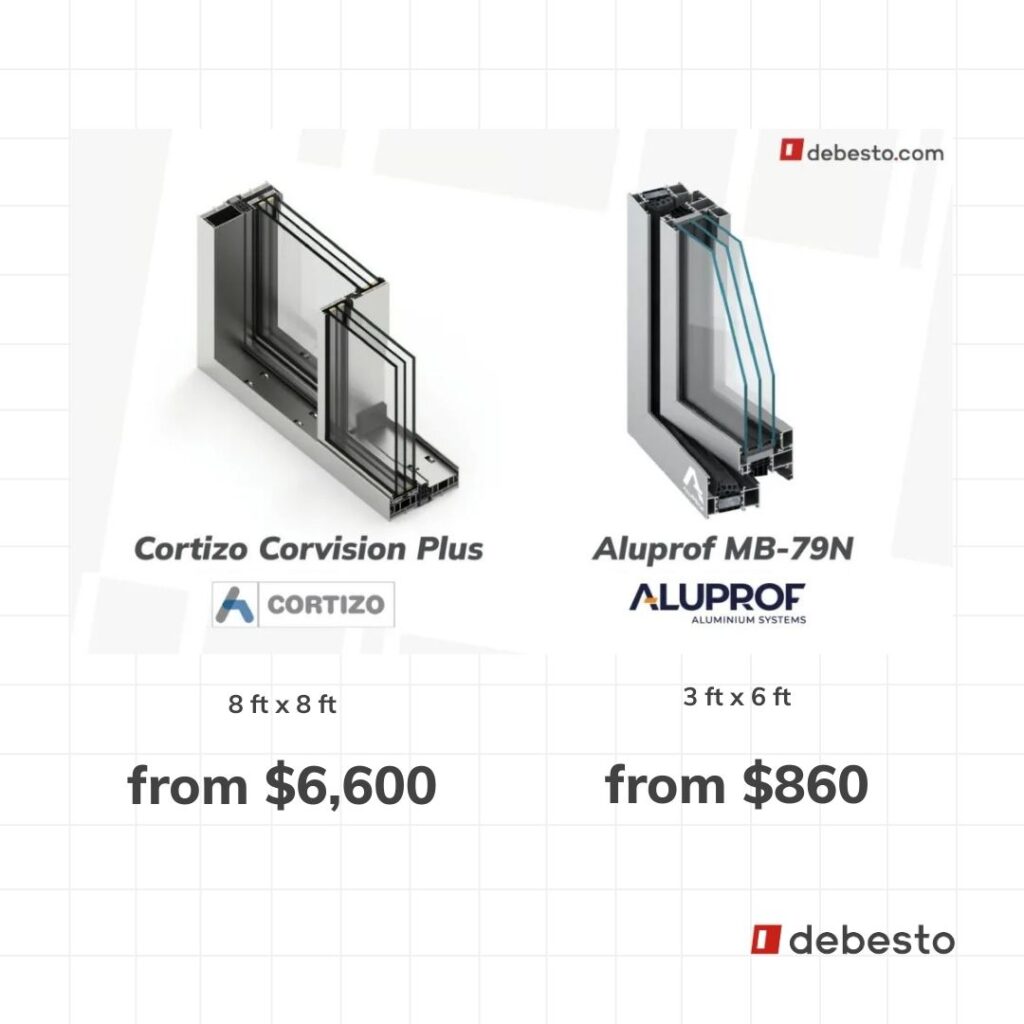
European aluminum window prices typically range from $32 to $100 per ft², depending on type, glazing, and configuration. For example, a double-glazed Aluprof MB-79N window (36 in × 72 in, tilt-and-turn) costs around $860 from a European supplier.
However, two windows of the same size can differ in price depending on specifications. The final cost is driven by glazing type, hardware class, thermal performance, opening function, and finish – not just frame dimensions.
Upgrading to triple glazing, choosing a custom color, or increasing the size will raise the price, while a fixed window of the same dimensions is usually the most budget-friendly option. Large sliding systems typically sit at the top of the price range due to heavier glass and more complex hardware.
That’s why from the next part of article, you can learn:
Are aluminum windows expensive compared to other materials?
Aluminum windows typically cost more than uPVC, but less than wood or steel. In most residential projects, they sit in the mid-to-high price range – offering stronger frames and slimmer profiles than vinyl, without reaching the premium pricing of steel.
Here’s how aluminum usually compares:
uPVC windows: up to 2x cheaper, but less durable and bulkier
Wood: price varies by species, often higher due to material and maintenance costs
Steel: typically the most expensive option, used mainly in high-end or niche designs
European aluminum windows with comparable specifications can cost up to 50% less than U.S.-made systems. However, price comparisons only make sense when based on full specifications — including glass type, U-value, hardware, coating, and shipping. Missing details can easily create a $200+ difference per window.
Aluminum window price comparison
Below, you’ll find a comparison of real aluminum window prices based on the most popular European systems – all with thermal breaks and glazing specs used by U.S. spec builders.
Opening type has the biggest impact on price. A fixed aluminum window can cost significantly less than a tilt-and-turn or sliding unit of the same size due to hardware, labor, and structural requirements.
Other key cost drivers include:
window size
number and type of glazing panes
frame system and thermal performance
manufacturer and hardware class
In Europe, aluminum windows are typically made to order, and custom sizing is standard. That means non-standard openings usually don’t generate extra fees or delays, which helps maintain budget predictability.
European aluminum sliding systems are most popular among U.S. spec home builders.
How to lower aluminum window costs – Why importing from Europe makes sense for spec homes?
IImporting aluminum windows from Europe can reduce unit costs by up to 50% compared to comparable U.S. systems – even after sea freight. The biggest savings appear in spec home projects with repeated window types, where volume offsets logistics costs.
For example, a triple-glazed tilt-and-turn window (36 in × 72 in) from Aluprof costs around $860, while a comparable U.S. product can exceed $1,700. Brands such as Aluprof, Schüco, Aliplast, and Cortizo offer high-performance systems with thermal breaks and made-to-order sizing. See the best systems that make sense for spec home builders.
Importing makes the most sense when the project timeline allows for container shipping and when order volume justifies freight costs. For smaller or urgent projects, local sourcing may be more practical. If you want to check shipping costs, use our delivery cost calculator. To understand the full process, see case studies of US customers or read the guide on when importing windows to the US pays off and when it doesn’t.
The main disadvantage is price. Compared to uPVC windows, aluminum systems can cost 30–70% more, depending on specifications and glazing. In projects with tight margins or entry-level budgets, this difference can significantly impact overall window costs.
Aluminum is still typically cheaper than steel and often comparable to or below premium wood systems. In higher-end spec homes, the additional cost is usually justified by slimmer profiles, durability, and long-term performance.
Another concern is thermal performance. Older aluminum windows had poor insulation, but modern systems use thermal breaks, triple glazing, and advanced sealing technology. Systems from Aluprof, Cortizo, Aliplast or Reynaers, Schüco, meet strict energy standards and perform well in cold, hot, and coastal climates.
How does price impact the growing popularity of European aluminum windows in the U.S.?
Simple: cost savings. U.S. builders sourcing from Europe choose aluminum systems because they pay significantly less – often around 50% less than for comparable U.S. products.
In high-end residential projects, that difference can translate into tens of thousands of dollars saved per build while still meeting U.S. building codes and energy requirements.
In spec homes, aluminum frames help position the property as high-end. That can justify a higher asking price — even if the window package itself cost less than local alternatives.
Bartek Michalak, Co-owner at debesto.com
Of course, aluminum windows aren’t for every build. The right choice depends on your project specs, budget, and resale goals. But if you’re sourcing smart and comparing apples to apples, European aluminum windows often offer the best value on the U.S. market.
Key Takeaways
For spec homes and high-end residential projects, the combination of lower sourcing cost and premium appearance can improve overall project margins and resale positioning.
In 2026, aluminum windows from Europe start at around $32/ft². Even after sea freight, total costs can be up to 50% lower than comparable U.S.-made systems.
At the same time, European manufacturers offer systems with documented U-values, NFRC data, and made-to-order sizing included in the base price.